
Student loans and personal rehabilitation: a case of a young professional
Many young professionals find that debt which began with student loans has grown through living-expense loans and card bills, so that even when their salary comes in, their account is empty within days. We also often hear in consultation that the debt did not come from gambling or luxury spending. Here we present a case based on an actual personal rehabilitation (gaein hoesaeng) matter, with some details changed to protect personal information.

Student loans he thought would be resolved after graduation
The client's family was not well off, but he did not give up on going to university. He covered tuition and living expenses with student loans from the Korea Student Aid Foundation, because he believed he could easily pay them back once he got a job.
At graduation, he was not very worried. He thought he could work hard and pay it back little by little. Reality turned out to be far harder than he had thought.


A long job search and living-expense loans
He did not land a job where he wanted right away. The preparation period he thought would be over in a few months grew longer and longer, and living expenses kept piling up in the meantime.
Wanting to manage on his own rather than lean on his parents, the client took out a living-expense loan from a savings bank. Even then, he thought he could repay it quickly once he got a job, but as time passed, the debt grew little by little and interest accumulated every month.
Why there was no money left even after getting a job
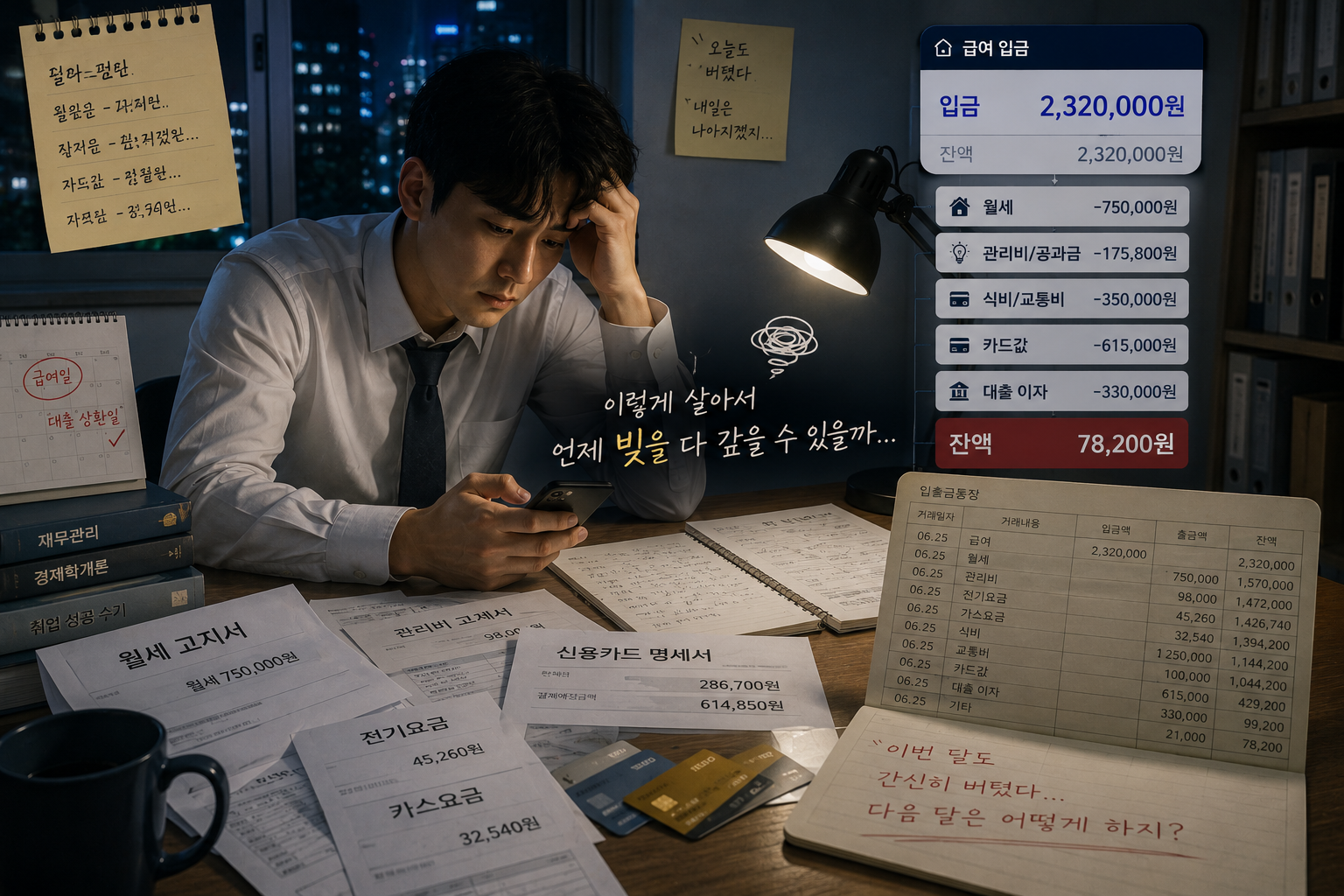
He finally joined a company. But it was hard to cover everything on a young professional's salary. After paying basic living costs such as monthly rent, maintenance fees and utilities, food, and transportation, there was almost nothing left.
He could practically not reduce the loan principal at all. Month after month he paid only interest, and card bills added to the burden. Payday was no longer a day to look forward to but a loan repayment day, and his salary was almost entirely gone within days of arriving.
How could he ever pay off all his debt living like this? His life became more about getting through this month than planning for the future.

Debt from making a living, not from luxury
The client's debt did not come from gambling or failed investments, nor was he a spendthrift. Most of it was student loans for his studies, living expenses during his job search, and the bare minimum cost of living needed to keep working.
He saved and saved to avoid falling behind on payments, but the high interest was hard to bear on his own. He decided to find a way before it was too late, and while looking into various options, he learned about the personal rehabilitation system.

The first question in consultation: will my company find out?
What the client asked first in consultation was not about the monthly repayment. He worried whether his company would find out about the personal rehabilitation and what would happen if people around him knew. Many clients who come to our office start with this question.
Generally, the fact that you have applied for personal rehabilitation is not automatically made known to your company or acquaintances. This client also continued going to work as usual during the personal rehabilitation, and the people around him did not know about it.

Can I do nothing once my credit is gone?
Credit issues also made the client anxious. He asked whether he would be unable to use his bank account and whether his working life would become difficult. Actual life turned out differently from what he had feared.
He had no problem receiving his salary and living on it, and no difficulty managing daily life with a debit card. On the contrary, he said that as the stress of unmanageable interest and collection demands eased, the weight on his mind became much lighter. Although credit cards are hard to use during personal rehabilitation, he found that a salary account and a debit card alone caused no great inconvenience in daily life.

What changed: being able to plan for the future
Before personal rehabilitation, payday was actually a day he dreaded. After starting personal rehabilitation, the amount to pay each month became clear, and he gained the goal of one day finishing off his debt.
The client, who had only worried about whether he could ever marry, whether owning a home would be forever out of reach, and whether he would have to keep living like this, said he is now planning an installment savings account and preparing for the future. He said the biggest change was not that the debt vanished in an instant, but that he could once again plan for hope.
If only he had sought consultation sooner
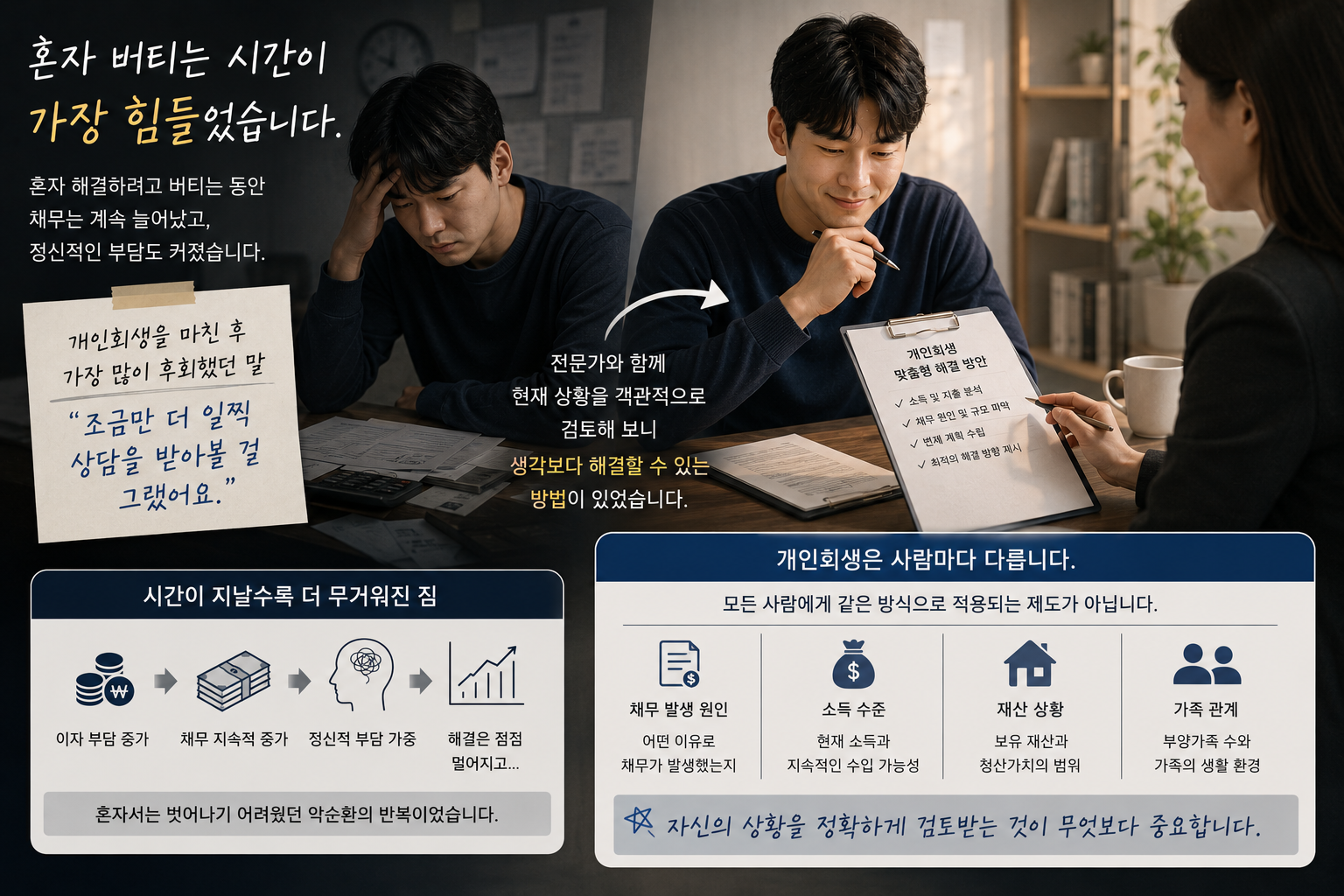
After completing the procedure, the client regretted one thing most: that he had not sought consultation a little earlier. While he held out on his own, his debt kept growing and so did the burden on his mind.
When he actually looked at his situation objectively, there were more ways to resolve it than he had thought. Personal rehabilitation does not apply to everyone in the same way. The direction of the case and the monthly repayment vary depending on how the debt arose, income, assets, and family relationships. That is why having your situation reviewed accurately matters more than anything.
Personal rehabilitation is not a procedure that merely reduces the amount of debt; it is a legal system that helps you start normal economic life again and plan for the future. Even within personal rehabilitation, the way each case is worked out can differ.
Points to remember from this case
- Debt that arose from making a living, such as student loans and living-expense loans, can also be adjusted through personal rehabilitation.
- The fact of personal rehabilitation is not automatically made known to your company or acquaintances, and you can carry on daily life with a debit card.
- Personal rehabilitation sets its direction by looking not only at the size of the debt but also at how it arose and your current living circumstances.
If you are a young professional getting by on interest payments for student loans, living-expense loans, and card bills, we encourage you to check your situation first rather than worrying alone. For those who have lived diligently yet find their debt hard to bear, personal rehabilitation can be not an end but a new beginning.
Last reviewed: 2026-10-19 This article provides general legal information; specific advice is given through consultation.
Tell us what is happening first
Leave an inquiry and we will explain how to proceed after reviewing it. If it is urgent, please call 1577-0448.