
When to seek Wonju personal rehabilitation consultation: prohibition orders and 3-year repayment plans
I dread payday. I get through each day by paying one card with another. I can't sleep because of collection calls. These are things we often hear in Wonju personal rehabilitation consultations. In this situation, the longer you hold out, the fewer options you have. Here we explain why you should not put off Wonju personal rehabilitation (gaein hoesaeng), along with the protections the system provides.

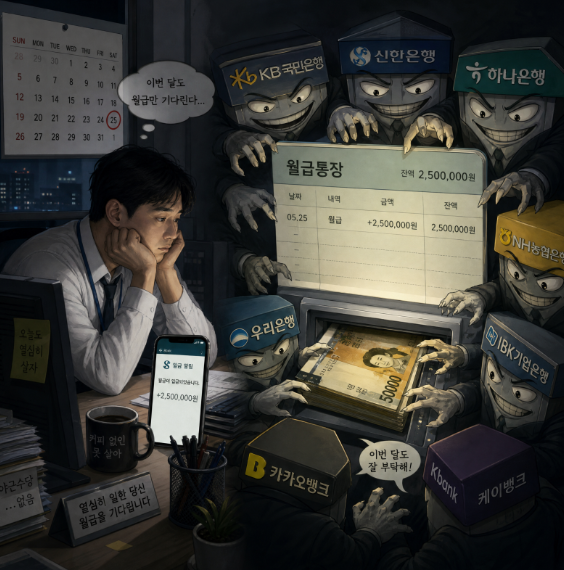
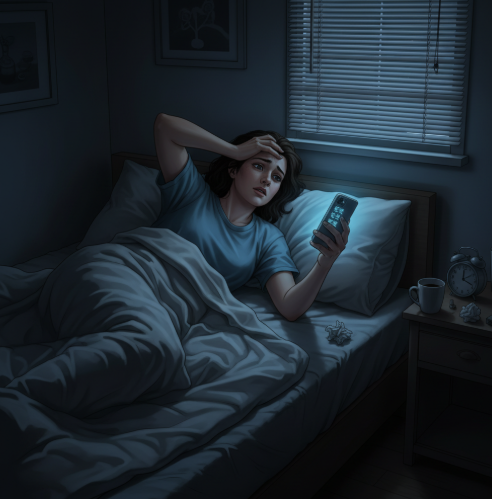
How a card delinquency spreads to private lenders
With the economic downturn and high interest rates, the number of people seeking Wonju personal rehabilitation consultations has risen sharply. It often starts with a single overdue card payment, but over time it frequently leads to card loans, cash advances, and private lending companies.

When this happens, your salary just passes through your bank account, and months keep repeating in which nothing is left for actual living expenses. At this point, the most important thing is to look into the Wonju personal rehabilitation procedure accurately before it is too late.
A prohibition order can stop dunning and debt collection
Personal rehabilitation is not a system that ends with reducing debt; it is a system for regaining a daily life that has fallen apart. When you file for Wonju personal rehabilitation, a prohibition order from the court can first stop debt collection and collection calls.

Many people regain peace of mind because they can also be protected from the risk of seizure or provisional seizure. Debt collection wears people down so much that some tell us in consultation that they slept well for the first time in a long while.

You repay while keeping the minimum cost of living
In the Wonju personal rehabilitation procedure, the minimum cost of living is guaranteed. Rather than using your entire salary to pay off debts, you repay with the amount left after deducting basic living expenses. Children's education costs, medical costs, and housing costs may also be considered depending on your circumstances, so you can prepare for a fresh start while continuing your life.
A 3-year repayment plan, a structure with a visible end
Above all, personal rehabilitation is a procedure with a visible end. It is not a structure in which you repay debts endlessly; generally, if you keep to the repayment plan for 3 years, you can receive a discharge of the remaining debts. As a result, the following three things become clear.
- Until when you repay
- How much you repay
- Through what process you recover
Hope becomes reality not when it is vague, but when the numbers and the period become clear.
If you are worried about your credit
One of the reasons people hesitate about Wonju personal rehabilitation is their credit. However, the longer the delinquency lasts, the worse your credit actually becomes.
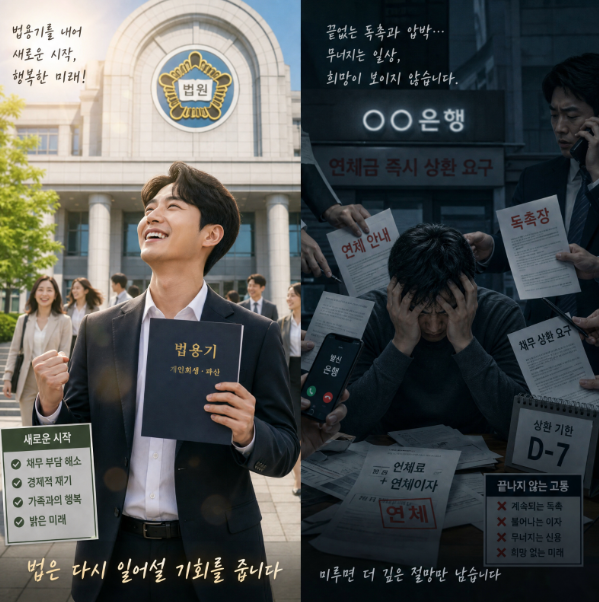
By repaying steadily through personal rehabilitation, you can create a new opportunity to restore your credit. Recently, if you pay the monthly repayments faithfully for a certain period, credit recovery has also become faster than before.
The years spent holding out are the biggest loss
The most unfortunate cases are those who spend several years juggling debts, telling themselves to hold out a little longer. In the meantime, interest keeps growing, health suffers, and family relationships often deteriorate as well.
The earlier you prepare for Wonju personal rehabilitation, the more options you have. Rather than suffering alone, get an accurate diagnosis of your current situation and check in a consultation for realistic ways to start again.
Last reviewed: 2026-10-19 This article provides general legal information; specific advice is given through consultation.
Tell us what is happening first
Leave an inquiry and we will explain how to proceed after reviewing it. If it is urgent, please call 1577-0448.