
What to do when caught drink driving, and penalty standards by blood alcohol concentration
The few minutes right after being caught at a drink driving checkpoint can change the weight of the penalty that follows. Driving after drinking is not a simple mistake; it leads to criminal punishment, license revocation, fines, and insurance disadvantages. Here we explain three things you must never do when caught drink driving and the penalty standards by blood alcohol concentration.
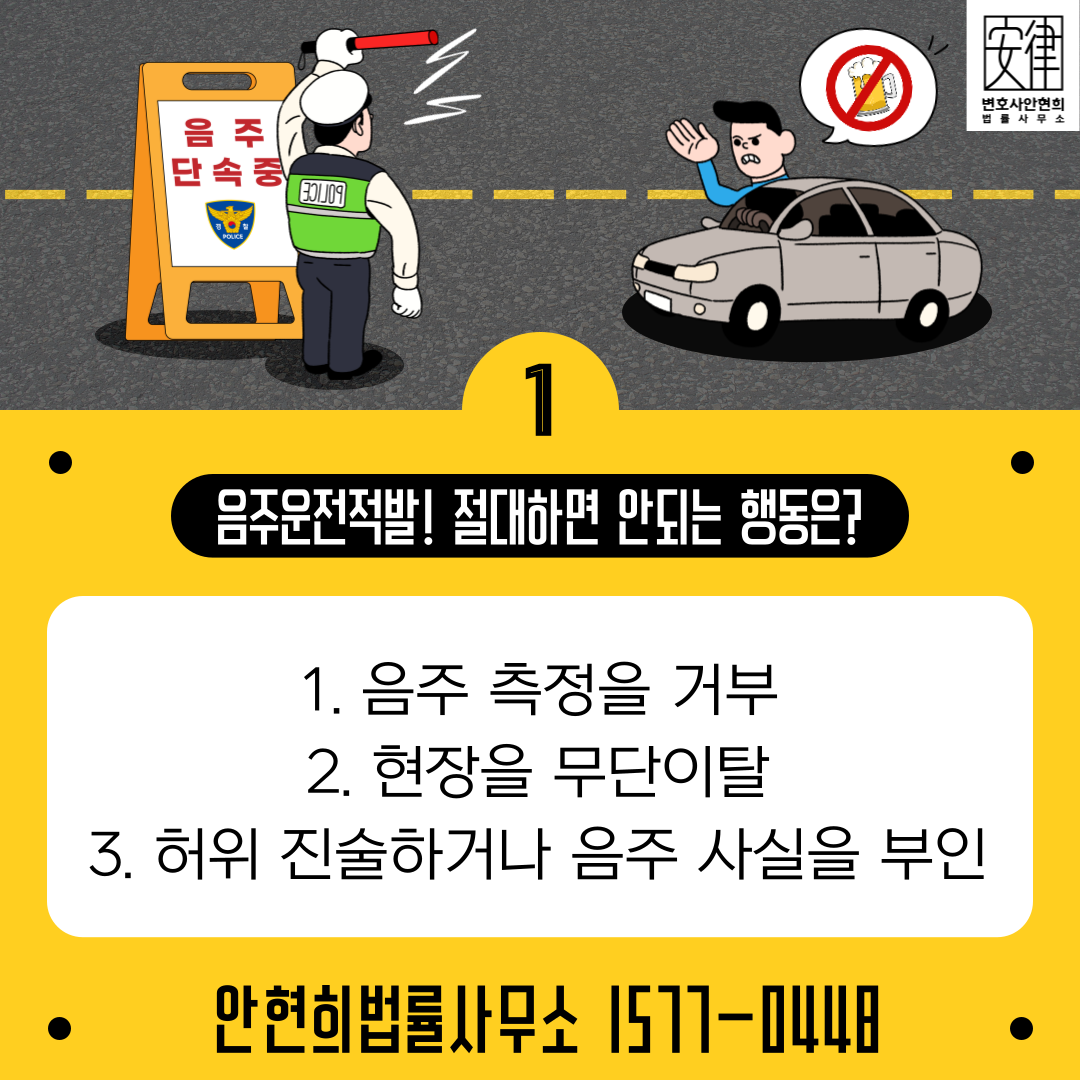
Thing not to do 1: refusing a breath test
Thinking that you won't be caught as long as you don't take the test is a big mistake. Refusing a breath test actually results in heavier punishment.
- Refusing the test is itself punishable, carrying imprisonment of 1 year or more and 5 years or less, or a fine of KRW 5 million or more and KRW 20 million or less.
- Your license is revoked, just as with a blood alcohol concentration of 0.08% or more.
- Even for a first offense, it becomes much harder to expect leniency.
Even if you are flustered, refusing the test means making your situation worse yourself. However much you fear the result, it is far better to comply with the test and then consider your legal response.
Thing not to do 2: leaving the scene
Many people panic and leave the scene, or park the car and walk away. This can make the situation worse.
- If you leave after an accident has occurred, it may be treated as a hit-and-run, and the penalty becomes much heavier.
- If there is a victim, your civil liability for damages also grows.
- It may be interpreted as an attempt to destroy evidence, raising the risk of arrest and detention.
Even before the police arrive, do not leave the scene and wait calmly. It is important to get legal assistance before giving a statement.
Thing not to do 3: false statements and denying drinking
Lying in a police investigation, for example by saying you were not driving or that you drank after the accident, can result in a heavier sentence.
- Investigative agencies determine the truth using CCTV, dashcam footage, and statements from people nearby.
- If the lie is revealed, you are seen as unremorseful, which is unfavorable in sentencing, and if you pretend someone else was driving, separate charges such as harboring a criminal may be added.
- There is also a possibility that the penalty escalates to imprisonment.
Rather than denying unreasonably, it is safer to organize the facts accurately and then decide on your response with an attorney.
Penalty standards by blood alcohol concentration
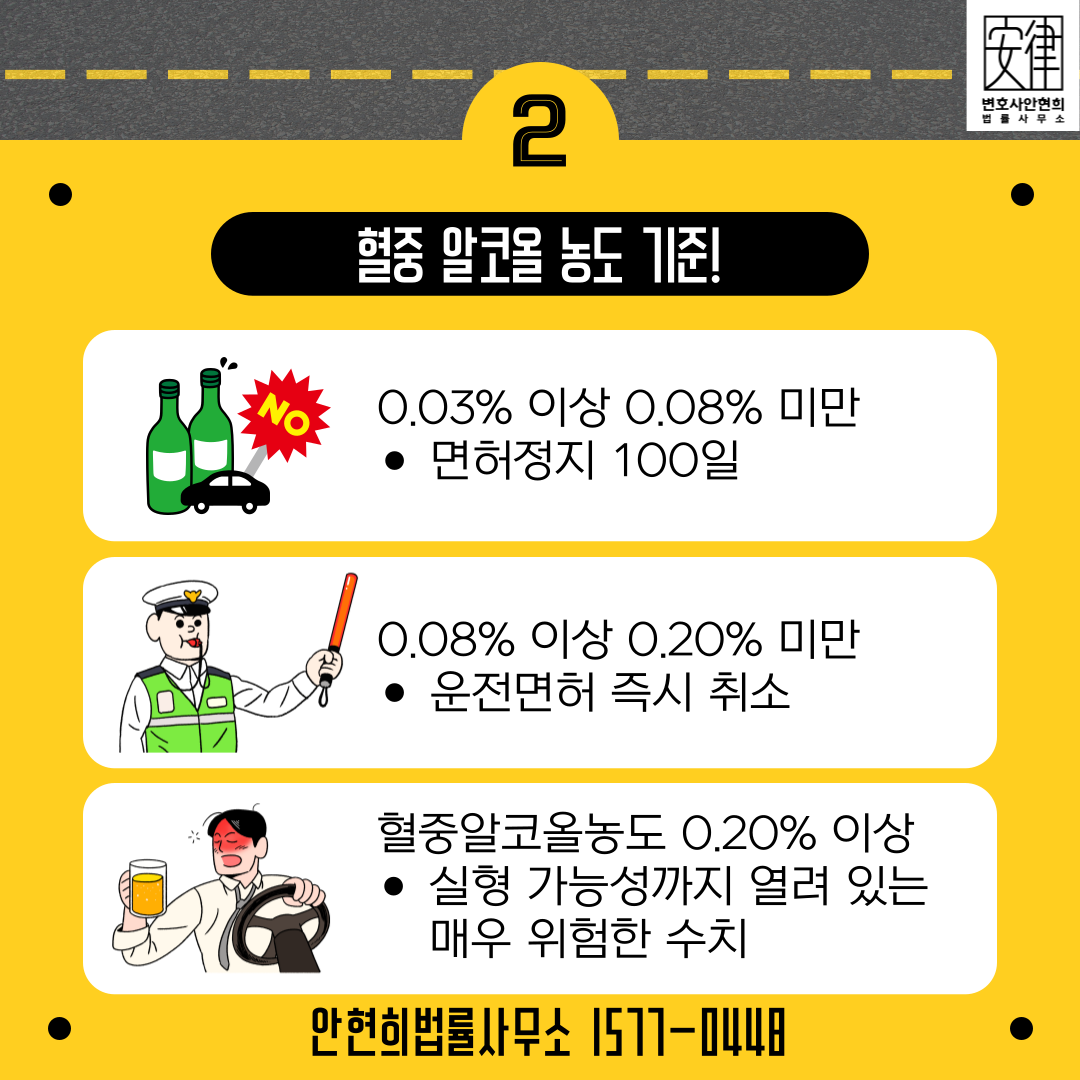
If you have drunk even one glass of soju or one glass of beer, it goes without saying that you should not drive. Still, if you have already been caught, it is important to know the drink driving penalty standards accurately. Drink driving is divided into license suspension, license revocation, and criminal punishment depending on blood alcohol concentration.
0.03% or more and less than 0.08%. This is the lowest level among the penalty standards, and drink driving is detected from 0.03%. You receive a 100-day license suspension and, depending on the case, it may end with a fine. For a first offense it sometimes ends at the level of a fine, but being caught alone leaves a criminal record and raises insurance premiums, among other disadvantages, so it is not something to take lightly.
0.08% or more and less than 0.20%. From here, the level of punishment rises sharply. Your license is revoked immediately and you become subject to criminal punishment. Even for a first offense, a fine of several million won or more is imposed, and if you have a prior drink driving record or caused an accident, a suspended sentence or prison sentence may follow. A large share of drink driving cases fall in this range, and the courts tend to view this concentration as a serious violation and judge it strictly.
0.20% or more. This level is regarded as effectively close to heavy intoxication, and even a prison sentence becomes possible. License revocation is a given, and if an accident occurred, the likelihood of imprisonment becomes very high. If it is a repeat offense or an accident injured someone, actual detention is also common, so particular care is needed.
In short, 0.03% or more already makes you subject to punishment, 0.08% or more means license revocation and criminal booking, and 0.20% or more or refusing the test can even lead to a prison sentence. Since a single figure can change the course of your life, how you respond right after being caught matters above all, and getting an attorney's advice early helps.
How much do you have to drink to exceed the limit?
Many people think one or two glasses of soju or one can of beer will be fine, but even a small amount of alcohol can push your blood alcohol concentration above 0.03%.
The speed at which alcohol is absorbed and broken down varies with constitution, body weight, sex, and whether you have eaten, so it is impossible to say definitively. On the premise that results differ from person to person, rough examples are as follows.
- 1 glass of soju (about 50ml): Even an adult weighing 60 to 70 kilograms can exceed the enforcement limit after drinking just one glass on an empty stomach.
- Half a bottle of soju (about 180ml): This amount can reach the license suspension or license revocation threshold. Even if you have eaten, you are likely to be caught if you are tested shortly after drinking.
- One can of beer (355ml): It is easy to take lightly, but depending on the person it can register around 0.03%, so if you get behind the wheel, you may be subject to enforcement.
Time and physical condition matter more than the amount you drank. Even with the same amount, blood alcohol concentration varies greatly depending on when you drank, body weight, whether you had eaten, and lack of sleep. In particular, the concentration often peaks between 30 minutes and 1 hour after drinking, so thinking that you will be fine because some time has passed is very dangerous.
Frequently asked questions about blood alcohol concentration
Can 0.03% come out even if I only breathed? It can. If alcohol remains in your mouth right after drinking, the reading may be higher than the actual level. Rinsing your mouth with water and being tested about 15 minutes later gives an accurate result.
This is my first offense and I registered 0.09%. Is a fine possible? It is possible, but the risk is high. Even for a first offense, 0.08% or more means license revocation and criminal punishment, and the result among a fine, a suspended sentence, or a prison sentence differs depending on the circumstances of the case, your occupation, and any prior record.
Even one glass of soju is not safe
Many people are caught at drink driving checkpoints because of the mistaken belief that one glass is fine. Current enforcement standards are very strict, so it is easy to exceed 0.03% even after truly just one glass. If you have been drinking, never get behind the wheel. If you have already been caught, the best course is to respond calmly and get legal advice quickly.
Drink driving is a serious legal problem that can affect your license, career, credit, and your whole life. The appropriate response differs by situation, whether a first offense or repeat offense, license suspension or license revocation, or a case involving an accident, so do not agonize alone; check your circumstances in a consultation. Drinking takes a moment, but the record lasts a long time.

In summary
- Refusing a breath test, leaving the scene, and making false statements all make the punishment heavier.
- A blood alcohol concentration of 0.03% or more means license suspension, 0.08% or more means license revocation and criminal punishment, and 0.20% or more opens the possibility of a prison sentence.
- Even a small amount of alcohol can exceed the limit, so do not drive if you have been drinking, and if you are caught, calmly organize the facts first.
Last reviewed: 2026-10-19 This article provides general legal information; specific advice is given through consultation.
Tell us what is happening first
Leave an inquiry and we will explain how to proceed after reviewing it. If it is urgent, please call 1577-0448.