
Bank Statements in Personal Rehabilitation: How the Court Looks at Loan Use and Withdrawals
Many people hesitate to file for personal rehabilitation because of their bank statements. We are often asked whether everything has to be submitted and whether something in them might cause a problem. The court does in fact examine bank statements closely. However, what the court is looking for is often a little different from what people fear, so we have set out, based on actual practice, how far bank statements are reviewed in personal rehabilitation (gaein hoesaeng).


The court always checks where recent loans went
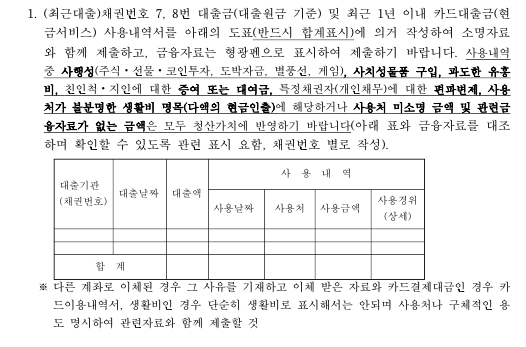
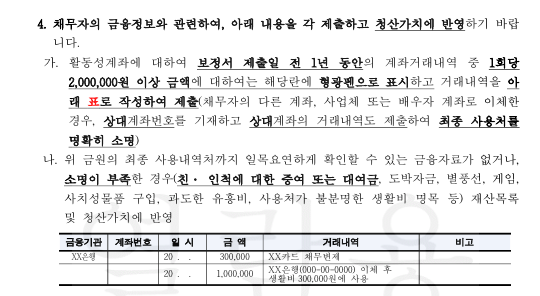
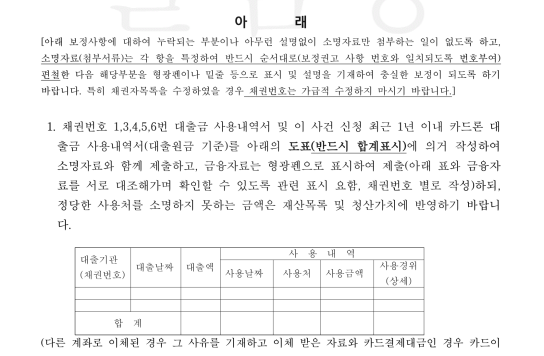
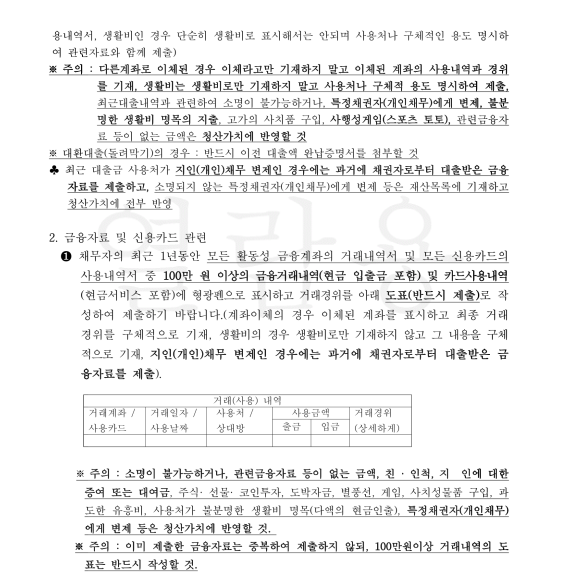
One of the most important things reviewed in personal rehabilitation is how loans taken out within the last year were used. Once loan money lands in the account, the court checks, almost without exception, where that money was spent.
There is also a common misunderstanding. Small expenses are usually not questioned. The court does not go through every KRW 10,000 or KRW 20,000 item; it typically asks for explanations starting with withdrawals of KRW 300,000 or KRW 500,000 or more.

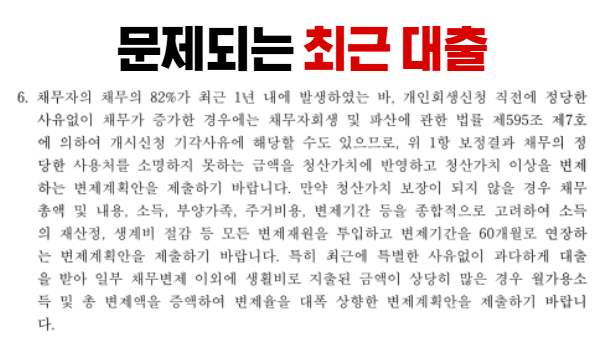
The following uses of money cause problems.
- Moving money to acquaintances to hide it
- Preferential repayment, paying off only certain debts to family members first
- Gambling, luxury spending and squandering
In these cases, the repayment amount can go up or the application can be dismissed.
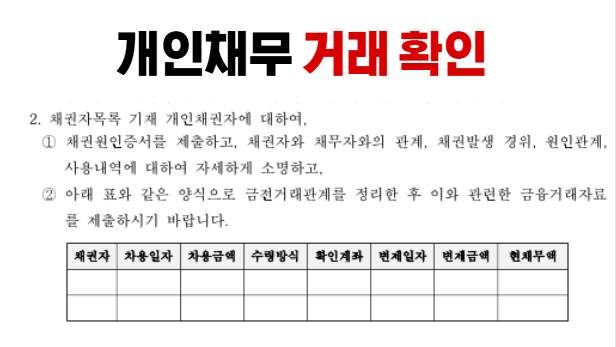
Why money going out matters more than money coming in
Many people worry about deposits, but what actually matters is withdrawals. The court looks at why money that could have gone to creditors was spent elsewhere instead.
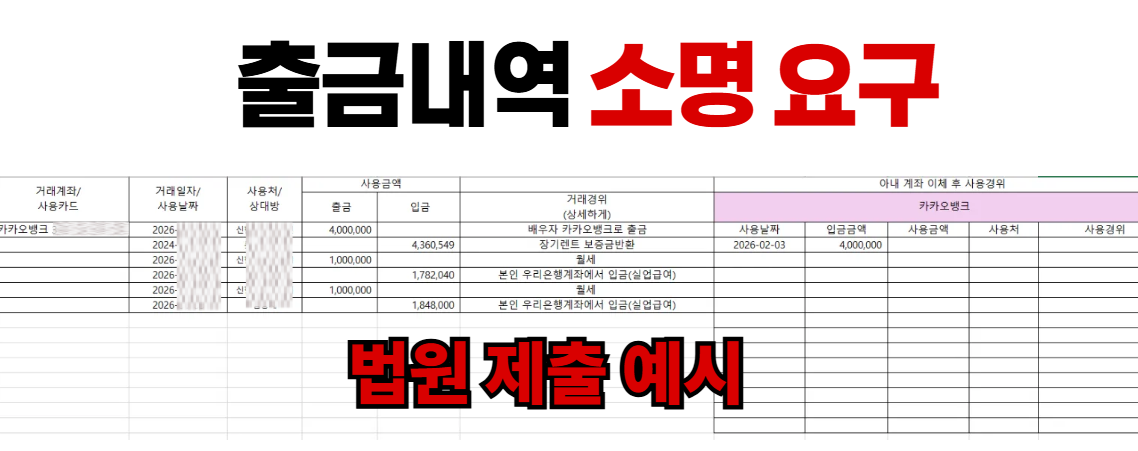

If you recently started a job, the court checks salary deposits
If you file for personal rehabilitation right after starting a job, the court checks whether you are actually working. The method is simple: it looks at whether your salary is deposited into your account steadily over the first, second and third months. If salary keeps coming in, the job is treated as genuine; if there are no deposits, the application can be dismissed. The court also checks where any severance pay was spent.

For the self-employed, actual income is calculated from the account
For people with irregular income, such as the self-employed, freelancers and insurance agents, actual earnings are calculated from bank statements. Usually an average over the last six months to one year is taken, and the net profit, sales minus expenses, is treated as income.
Here the bank account can matter more than the certificate of income amount issued by the tax office. Even if income is recorded low because of expenses claimed for tax purposes, if money actually remains in the account, the court treats it as income.

If you used card cash-outs, the key is how the money was used
When loans are no longer available, some people use card cash-outs (kadeu kkang), making a card payment and receiving cash minus a fee. What the court focuses on is where that money went. If it was used to repay debts or for living costs, it is not a problem, but if the use is unclear, or cash was withdrawn and cannot be explained, it becomes a problem.
We are also often asked whether card cash-outs are punishable. In principle there is an element of illegality. However, the rehabilitation court is not an investigative agency, so it usually judges the matter based on how the money was used.
Securities and crypto accounts must all be submitted too
This is often overlooked. Securities accounts and cryptocurrency accounts must all be submitted as well.

Losses are not much of a problem, but any remaining balance is included in your assets. For example, losing KRW 100 million is not in itself a problem, but if KRW 5 million remains in the account, that KRW 5 million is counted as an asset.
In summary
In the end, the review of bank statements in personal rehabilitation comes down to one question: where did the money go?
- Fine: living costs, debt repayment, ordinary spending
- Risky: hiding assets, preferential repayment, luxury spending or gambling, unexplained use
If your spending was ordinary, it is rare for bank statements to block personal rehabilitation. Rather than worrying alone, have your own statements reviewed and get an accurate assessment suited to your situation.
Last reviewed: 2026-10-19 This article provides general legal information; specific advice is given through consultation.
Tell us what is happening first
Leave an inquiry and we will explain how to proceed after reviewing it. If it is urgent, please call 1577-0448.