
Wage Garnishment vs. Bank Account Seizure, and Prohibition and Stay Orders in Personal Rehabilitation
"My salary has been garnished." We hear this often in debt consultations, but when we actually check, it is not often that the wages themselves have been seized. In most cases it is the bank account into which the salary is paid that has been seized. We compare wage garnishment and bank account seizure, which are easy to confuse, along with the prohibition orders and stay orders available in personal rehabilitation (gaein hoesaeng) proceedings.



Bank account seizure vs. wage garnishment: what is seized?
Much of what people call wage garnishment is actually a seizure of the account into which the salary is paid. Because the target of the seizure is the bank rather than the employer, your salary is paid as usual, but you cannot withdraw money from that account. You are earning money but cannot access it. If you change the account your salary is paid into, the seizure often has no effect on the new account.
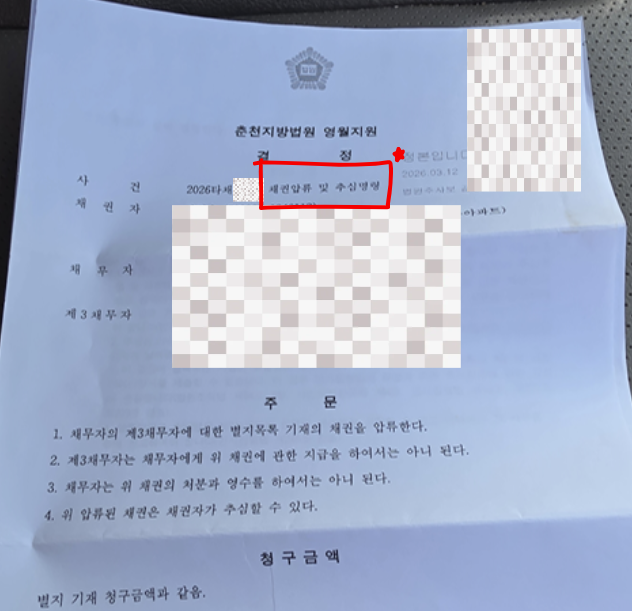
The image above is an example of a bank account seizure, and the two below are examples of wage garnishment.
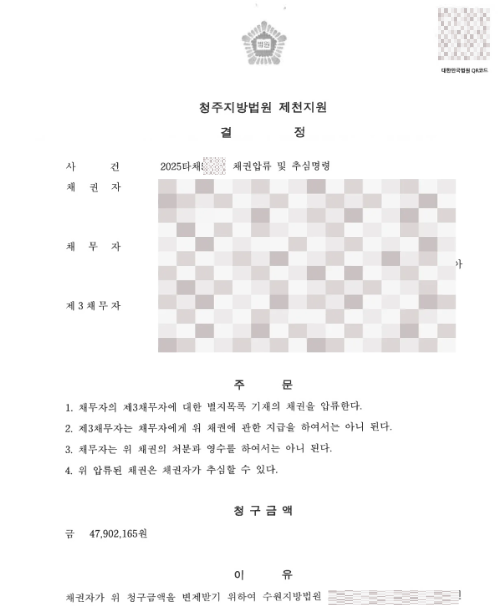
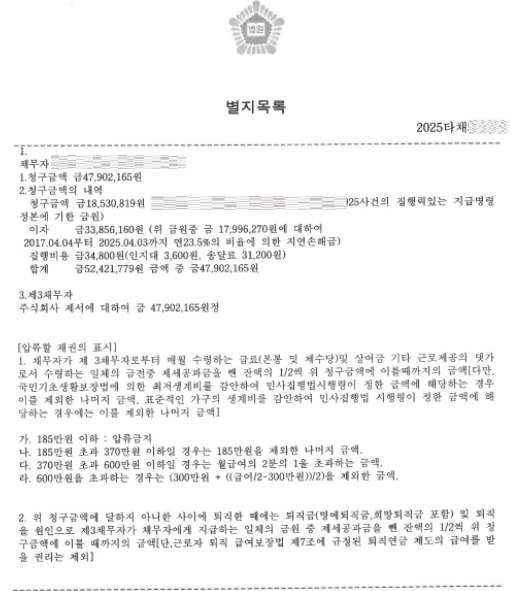
The real burden is wage garnishment
Wage garnishment is different from the outset. The target of the seizure is the employer, called the third-party debtor in legal terms. The structure is that the creditor, through the court, demands that the employer pay the salary owed to this employee to the creditor instead of the debtor.
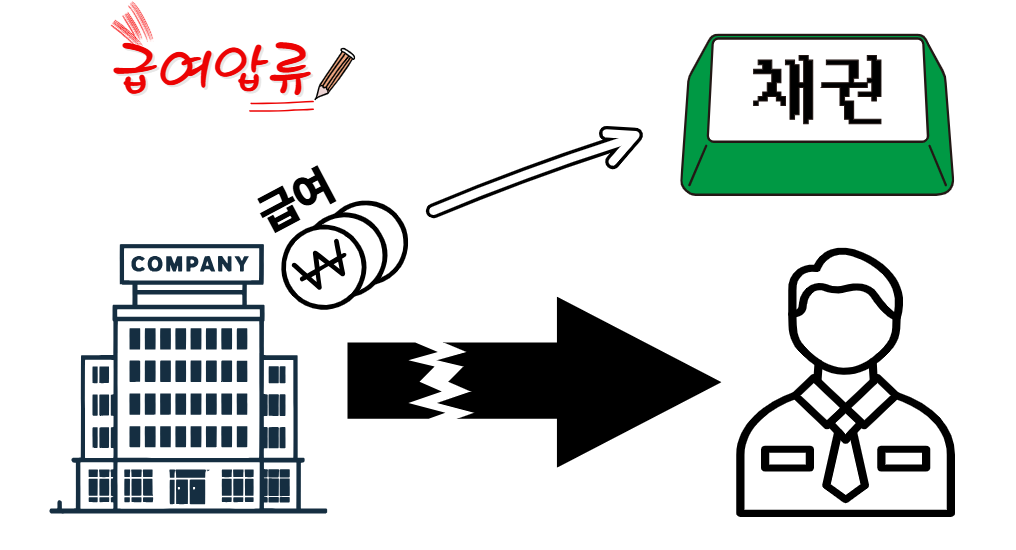
The employer then cannot pay the employee the full salary and must send part of it directly to the creditor. Because the employer also learns of the seizure, the emotional burden is inevitably heavy.

Three reasons wage garnishment is rare
First, there is an amount that cannot be seized. As of the time of writing, up to about KRW 1.85 million a month is protected from seizure. If your salary is KRW 1.85 million, there is nothing to seize, and if it is KRW 2 million, only about KRW 150,000 can be seized. For the creditor, there is little to collect relative to the effort involved.
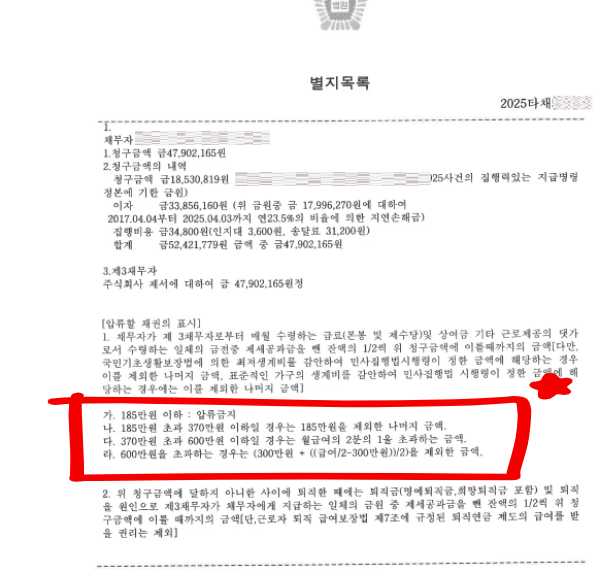
Second, the effect is low relative to the cost. The creditor must first obtain an enforceable title such as a judgment, the procedure is cumbersome and the amount recovered is small. That is why most creditors choose bank account seizure and often use wage garnishment as a means of pressure.

Once wages are garnished, the debtor can no longer exercise rights over that portion, and it works much as if the creditor were collecting it in the debtor's place.

Third, there is the burden on the employer. When wages are garnished, the employer takes on the administrative work, and the employee's credit problems come to light. As a result, some employers put pressure on the employee. This happens often in actual practice, and we receive many related inquiries.

Is there a way to avoid wage garnishment?
If the salary you receive is within the amount protected from seizure, there is nothing to actually take even if a seizure is made, so the seizure serves no practical purpose.
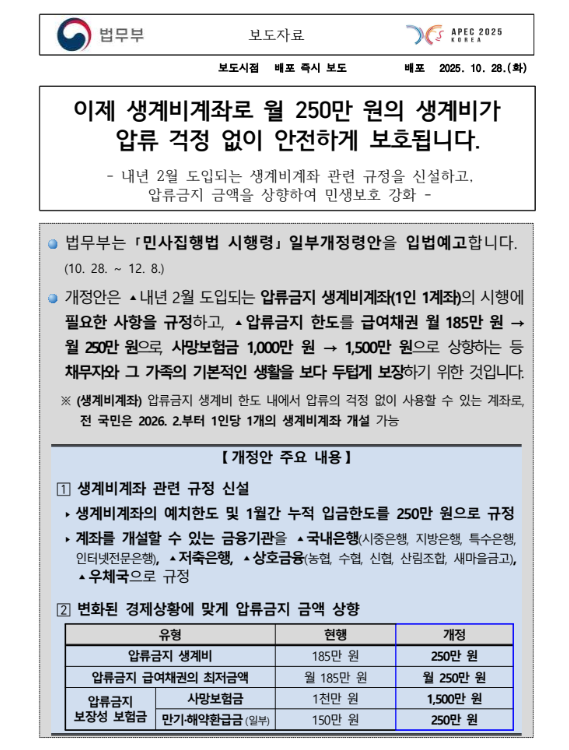
It is an extreme measure, but if you change jobs, a seizure placed on your former employer does not extend to wages from your new employer.

Prohibition orders and stay orders in personal rehabilitation
This is the most important part. When you file for personal rehabilitation, you can deal with seizures through two kinds of orders.

A prohibition order can block new wage garnishments, but you should know that a prohibition order alone is not enough to block bank account seizures.
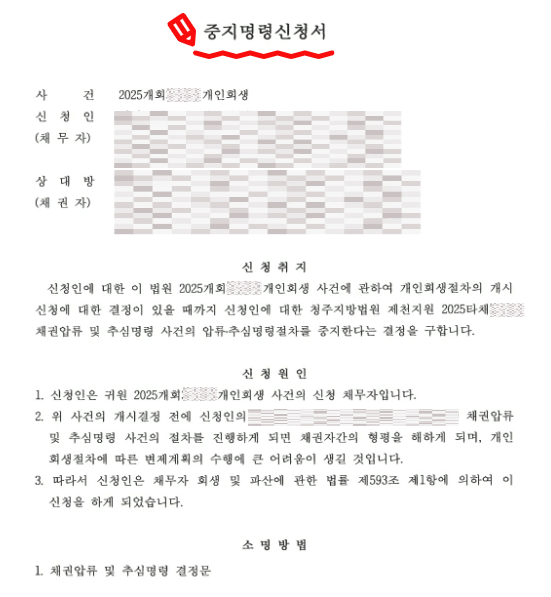
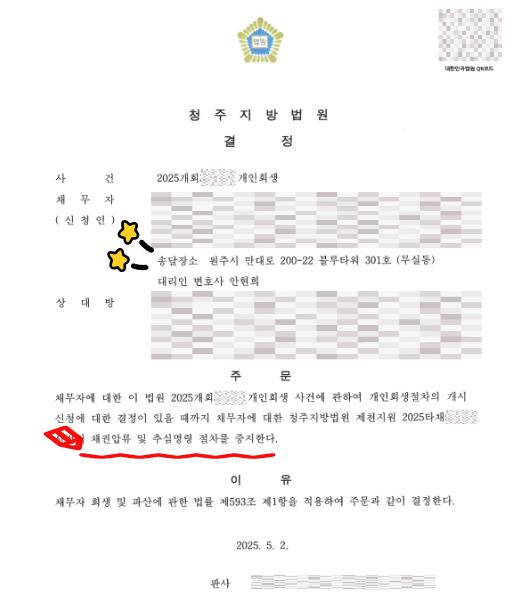
If a seizure has already been made, a prohibition order alone is not enough and a stay order is needed. Once a stay order is issued, wage garnishment and collection stop and the creditor can no longer take the money. In practice, stay orders on wages tend to be granted relatively readily.
Wage garnishment is not a dead end
Wage garnishment feels very heavy emotionally, but structurally it is not a situation with no way out. In fact, within personal rehabilitation proceedings it is an area with well-established protections.
- Not everything called wage garnishment is the same; most cases are bank account seizures.
- Genuine wage garnishment directed at the employer is rarer than you might think.
- When you file for personal rehabilitation, a prohibition order can block new seizures and a stay order can halt seizures already made.
Last reviewed: 2026-10-19 This article provides general legal information; specific advice is given through consultation.
Tell us what is happening first
Leave an inquiry and we will explain how to proceed after reviewing it. If it is urgent, please call 1577-0448.