
Comparing Debt Adjustment Options: Personal Rehabilitation, Bankruptcy and Workouts
Debt adjustment (chaemu jojeong) options fall into two broad groups. One is public debt adjustment through the court, namely personal rehabilitation and personal bankruptcy. The other is private debt adjustment through the Credit Counseling and Recovery Service, namely fast-track debt adjustment, pre-default debt adjustment and individual workouts. Rather than choosing the option that looks easiest, you should understand the differences in structure and effect and choose the one that fits your situation. Focusing on personal rehabilitation (gaein hoesaeng), we compare the differences between each debt adjustment option in a table.
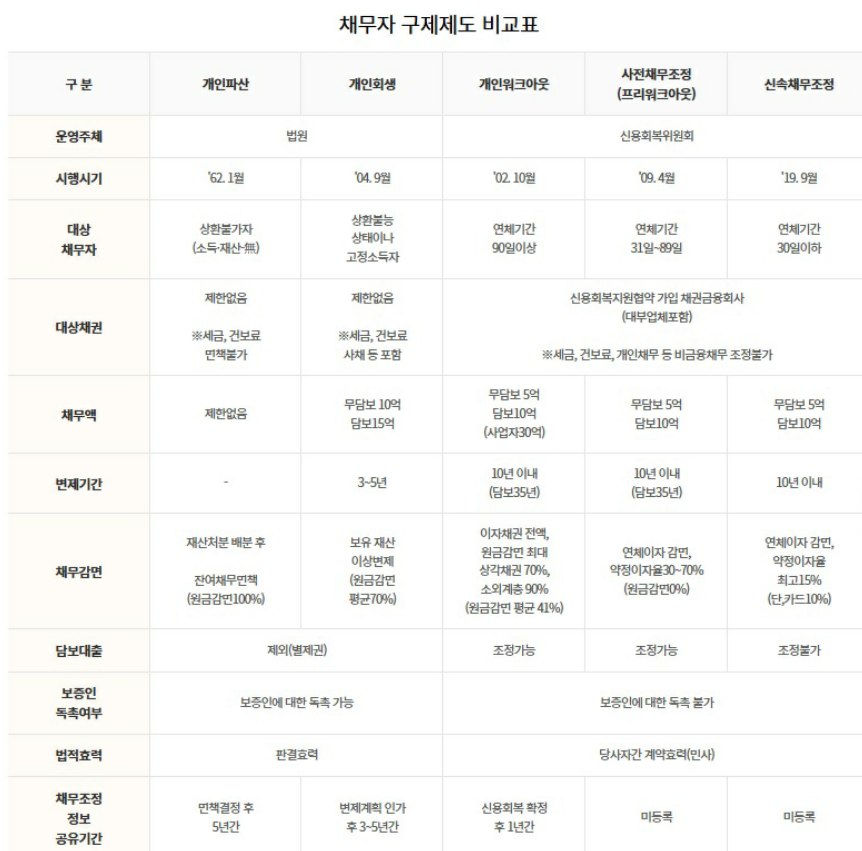
Debt adjustment options at a glance
Personal bankruptcy is also a form of public debt adjustment through the court, but this article focuses on comparing personal rehabilitation with the Credit Counseling and Recovery Service's workout-type programs, which people with income weigh against each other most often.
How does personal rehabilitation reduce debt?
Personal rehabilitation is a debt adjustment option in which a debtor with a regular income obtains court confirmation, repays a set amount over three to five years and is discharged from the remaining debt. Its biggest advantage is that it can reduce not only interest but also principal.
That is why the larger the debt, the greater the effect. It suits employees and self-employed people with steady income particularly well.
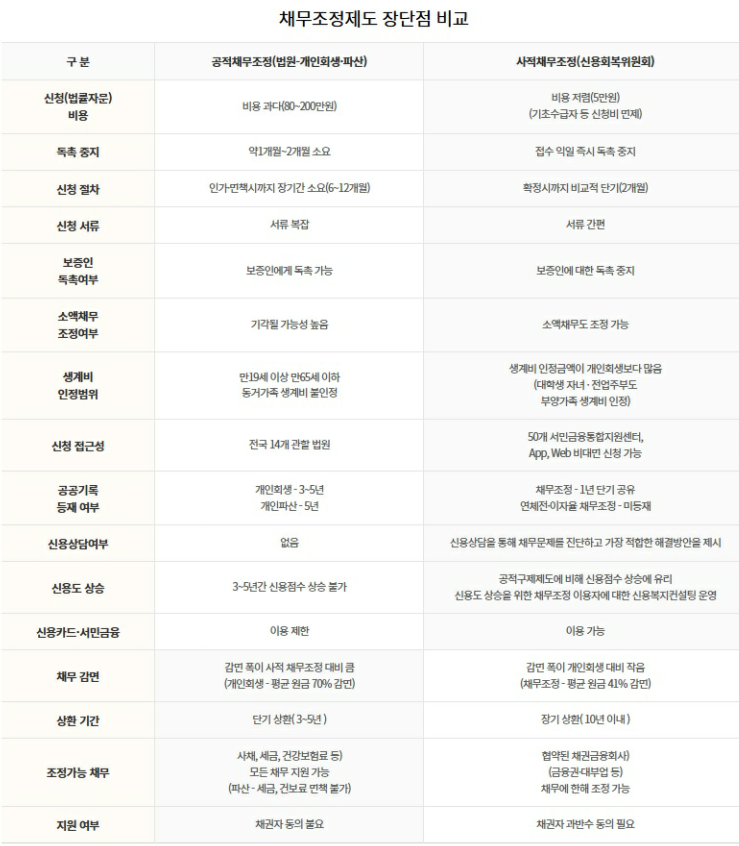
Strengths and limits of workout-type private debt adjustment
Private debt adjustment, such as fast-track debt adjustment and pre-default debt adjustment, formerly called pre-workout, has the advantages of a simple procedure, low costs and collection stopping as soon as you apply. However, most of it focuses on cutting interest, so the principal reduction is not large. When the debt is large, it often fails to provide a fundamental solution.
This means it helps ease the immediate burden, but in the long run it has limits in restoring your finances. The program you apply for also depends on how long you have been in arrears.
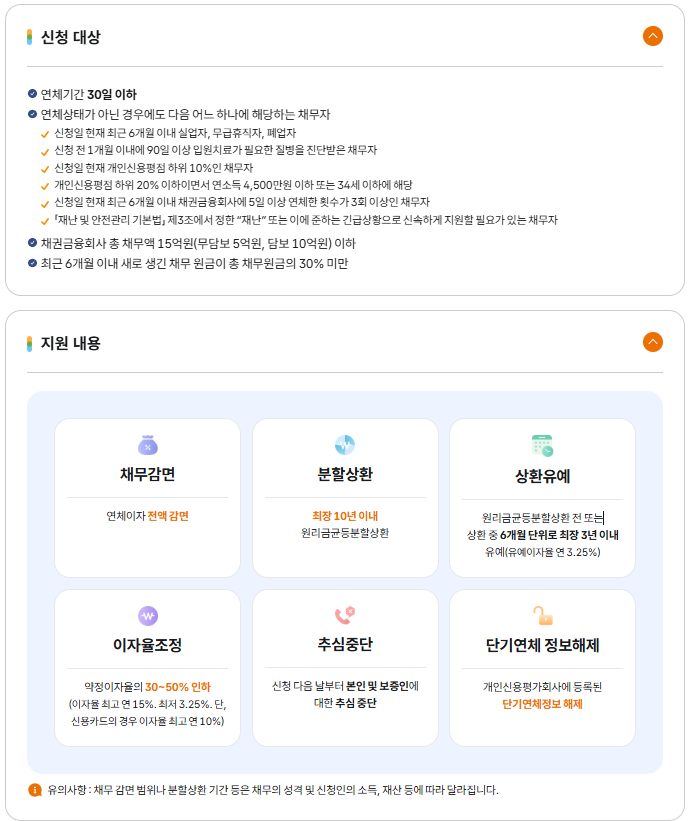
Fast-track debt adjustment is applied for when you are 30 days or less in arrears.
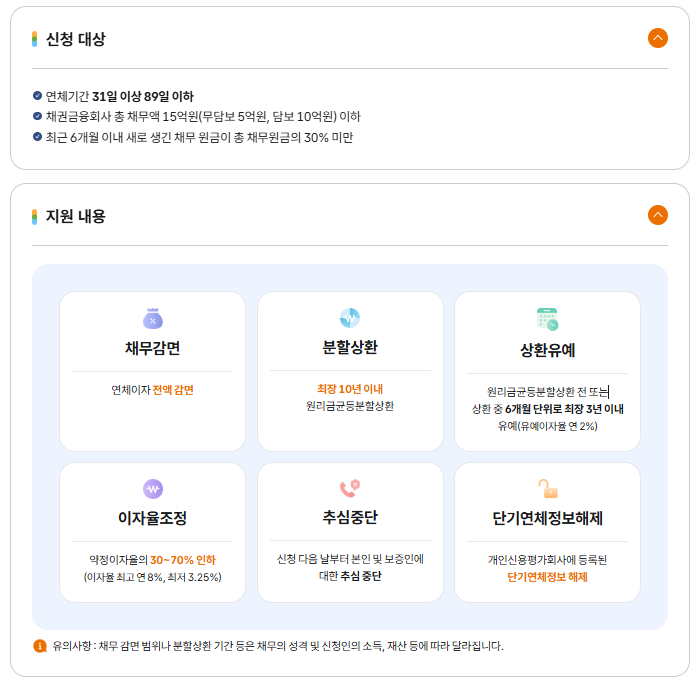
Pre-default debt adjustment is applied for when you are 31 to 89 days in arrears.
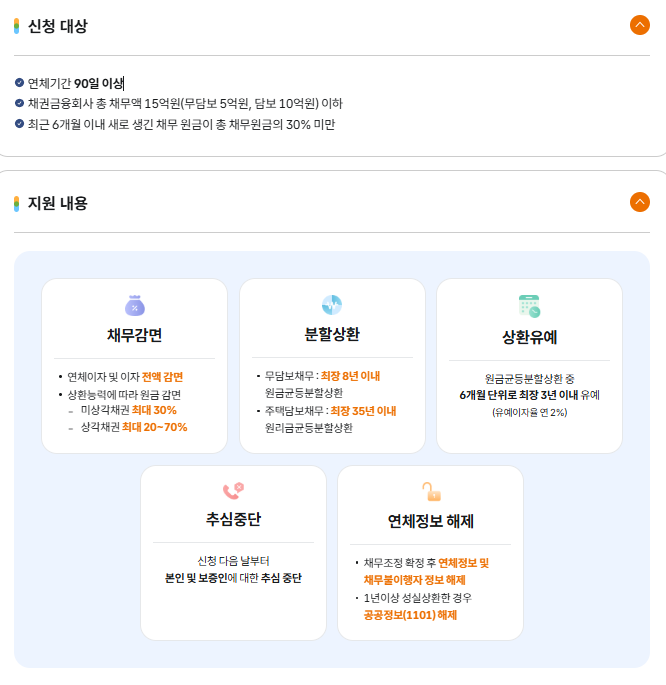
An individual workout is applied for when you are 90 days or more in arrears.
Creditor consent: where the options really diverge
One of the important differences between the two groups of debt adjustment options is creditor consent. Private debt adjustment requires the consent of creditors such as financial institutions, so the procedure can stall if some creditors object.
Personal rehabilitation proceeds by court decision, so you can go through the procedure even if creditors do not consent. Its structure is correspondingly stable.
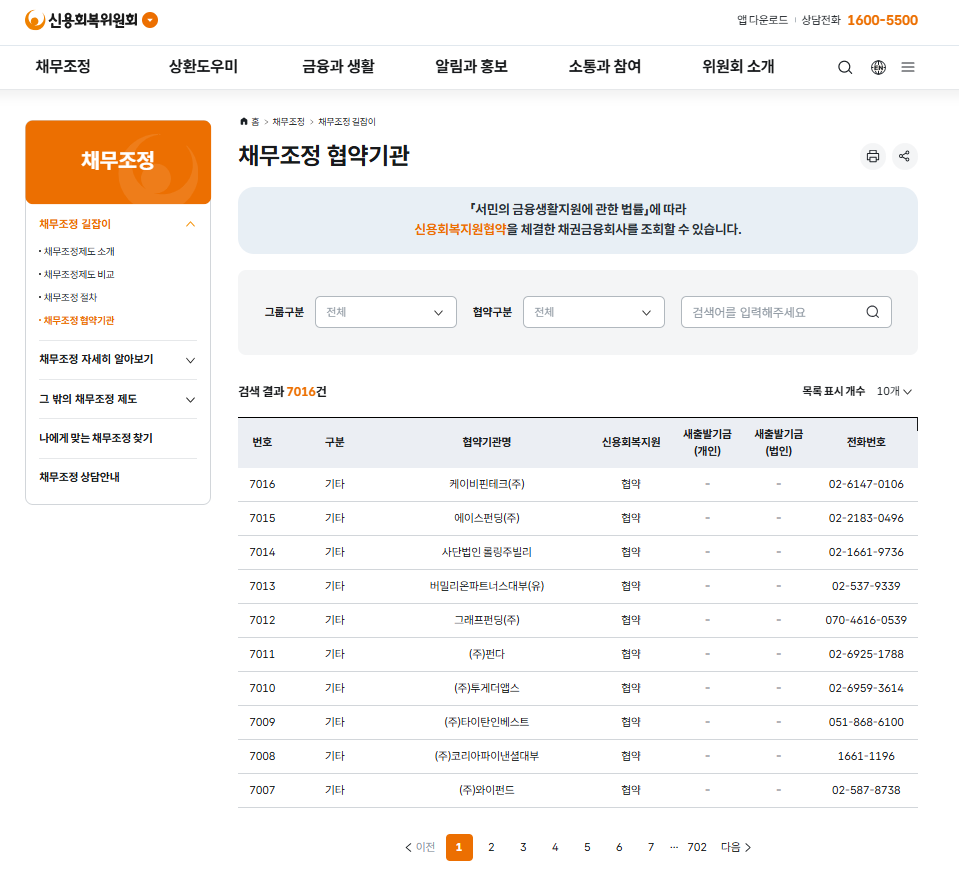
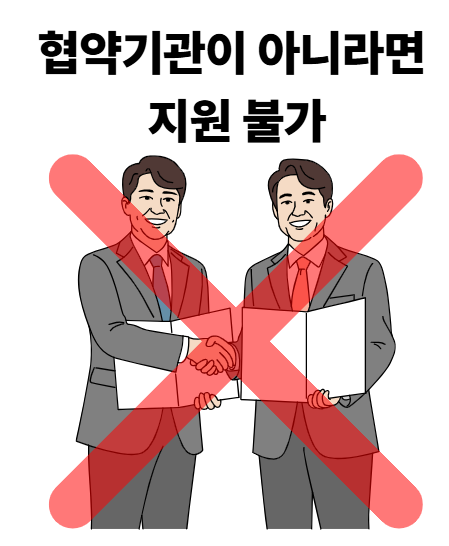

If you are considering a workout-type program, it is a good idea to check whether your creditors are institutions that have signed the Credit Counseling and Recovery Service agreement.
Comparing the speed of credit recovery
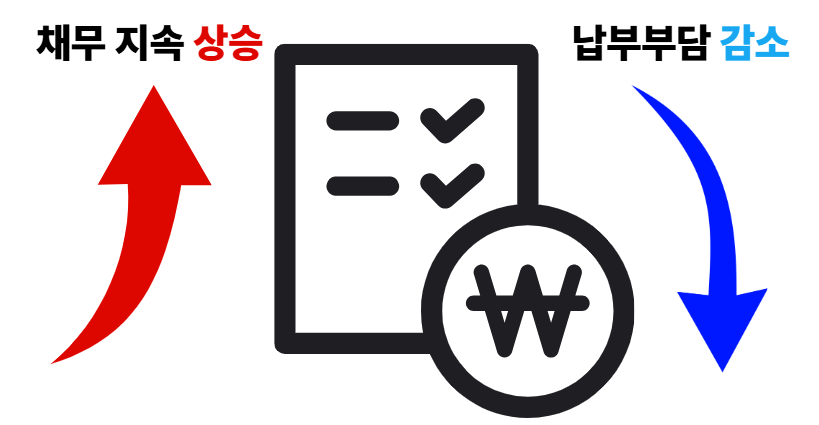
It is also worth comparing them in terms of credit. Personal rehabilitation brings credit restrictions while it is under way, but once repayment is completed you can return to normal financial transactions, making it a foundation for a comeback. Private debt adjustment restores credit relatively quickly, but because the amount reduced is small, the debt burden may continue for a long time.
Who personal rehabilitation suits
In summary, personal rehabilitation is the most realistic debt adjustment option for people who have a regular income, a large amount of debt and a need to resolve it over the long term. It has the drawbacks of a complex procedure and a long duration, but considering the principal reduction and legal protection, it is well worth considering. Debt does not disappear by avoiding it, so the first step is to choose accurately, among personal rehabilitation, bankruptcy and workouts, the option that fits your situation.

Last reviewed: 2026-10-19 This article provides general legal information; specific advice is given through consultation.
Tell us what is happening first
Leave an inquiry and we will explain how to proceed after reviewing it. If it is urgent, please call 1577-0448.