
The Commencement Decision in Personal Rehabilitation and How Repayments Are Paid
After filing for personal rehabilitation, you will often be told to save money in advance. The reason lies in how repayments are paid. The first repayment is set based on the filing date, but the account you pay into is only created once the commencement decision is issued. We explain, in order, how paying repayments changes depending on when the commencement decision comes in personal rehabilitation (gaein hoesaeng).
The first repayment falls within 90 days of filing
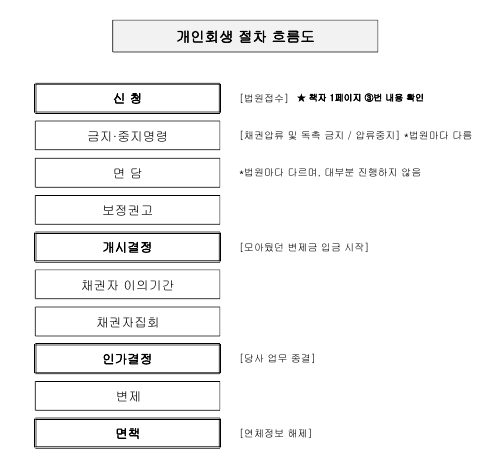
The personal rehabilitation application includes a proposed repayment plan, in which you state the start date from which you will pay repayments. Under court rules, the repayment start date must be set within 90 days of the filing date.
If the filing date is January 1, you can set March 30, the 90th day, as the repayment start date, and that day becomes the due date for the first repayment. Most people want to start as late as possible, so they often choose the 90th day. Usually the first installment is counted from the filing date plus 90 days.

The court does not deduct repayments for you
Many people think the court collects repayments automatically and they receive the rest. The actual structure of repayment in personal rehabilitation is the opposite. Once the commencement decision is issued, the court notifies you of a virtual account for repayments, and the debtor must transfer the money to that account directly.
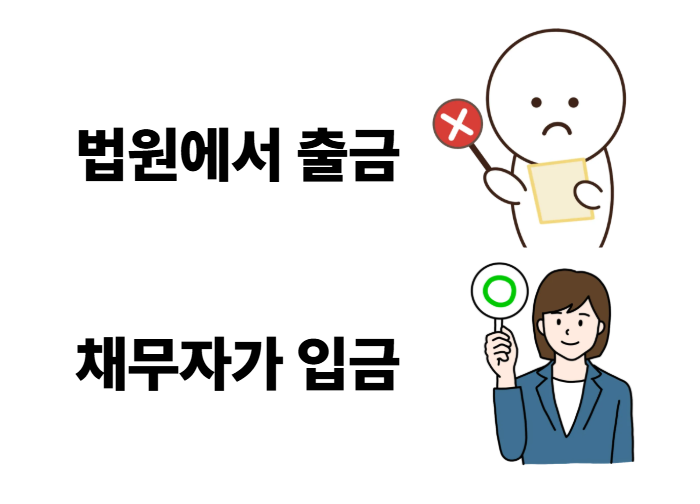
That is why most people set up a monthly automatic transfer.
What happens if the commencement decision is delayed
The point to watch most closely in the payment structure is the timing of the commencement decision. If the commencement decision comes late, you may have to pay the overdue repayments all at once. Let us put two cases side by side.
If the commencement decision came on March 10, the repayment amount has been fixed and the virtual account has been issued, so you only need to pay one month's worth on March 30.

If the commencement decision came on April 30, things are different. March 30 was the first due date, but at that point the repayment amount had not been set and there was no account to pay into, so you could not pay at all. In the end, you must pay the March and April installments together after the commencement decision.

At one court, the commencement decision took so long that a debtor saved up eleven months' worth and paid it all at once.
If it is KRW 1 million a month, how much should you prepare?
Suppose the repayment is KRW 1 million a month. If two months are overdue, you may have to pay KRW 2 million, and if three months are overdue, KRW 3 million, all at once with the first payment.
When you file for personal rehabilitation, the card bills and loan interest you had been paying stop. This is why we advise you not to spend that money but to save it.
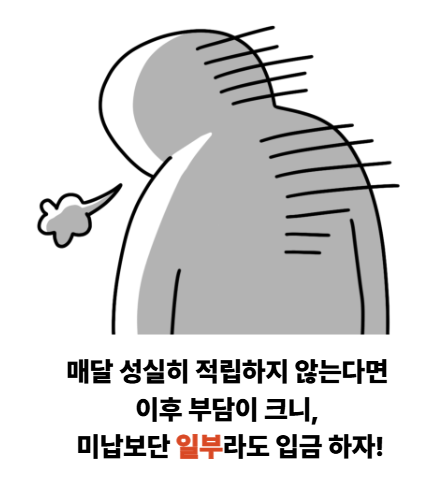
Failing to pay a lump sum does not mean immediate discontinuance
We are also often asked whether personal rehabilitation is discontinued if you suddenly cannot pay a large sum. Not necessarily. If there is a legitimate reason, you can apply to have the repayment start date postponed.
If a family member is ill, unexpected hospital bills have come up or your income has fallen, you can submit a medical certificate or income documents and ask the court to postpone the repayment start date. The court does not always grant this, so saving in advance whenever possible is the safest course.
The key points again
- The repayment start date is within 90 days of filing, and the first installment is usually on the 90th day.
- Repayments are paid directly into the virtual account notified after the commencement decision.
- If the commencement decision is delayed, you may have to pay two or three months' worth at once, so save several months' worth while card bills and interest are on hold.

Last reviewed: 2026-10-19 This article provides general legal information; specific advice is given through consultation.
Tell us what is happening first
Leave an inquiry and we will explain how to proceed after reviewing it. If it is urgent, please call 1577-0448.