
Disadvantages of Personal Rehabilitation: From Living Expenses to Cards, Loans and Guarantee Insurance
Personal rehabilitation is a system that helps people weighed down by debt continue their economic lives, but there are clearly disadvantages to accept while it is under way. Living expenses become tight, cards and loans are blocked, and depending on your occupation, guarantee insurance can become an obstacle. We have set out, in five parts, what actually changes before you file for personal rehabilitation (gaein hoesaeng).

First, living expenses are tied to the court's standard
The first disadvantage people feel in personal rehabilitation is in living expenses. The monthly repayment is set as monthly income minus the living expenses recognized by the court, and this living expense standard is lower than you might think.
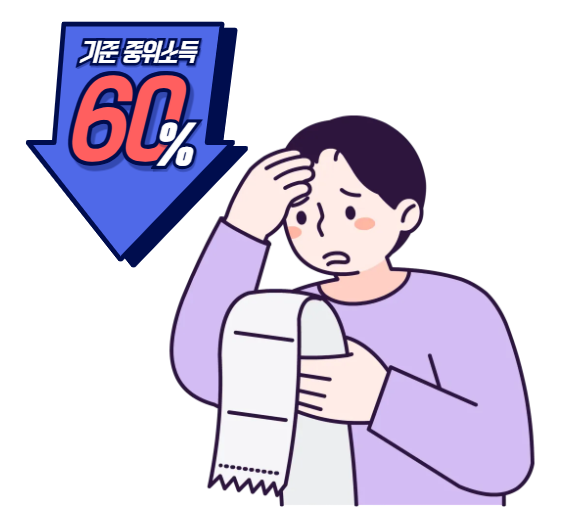
These amounts are set at around 60 percent of the standard median income as of the time of writing. Because you have to run your household within this range for the whole three years of personal rehabilitation, you need to cut spending significantly. With prices rising these days, we also hear often that it is not easy to get by on these living expenses.
Second, you cannot use credit cards
Once the personal rehabilitation procedure begins, credit card use is blocked. That does not mean every means of payment is blocked.

- What you can use: bank accounts, debit cards, cash
- What you cannot use: credit cards, postpaid transit cards, postpaid Hi-Pass toll cards
Prepaid methods instead of postpaid ones can be used. Prepaid transit cards and rechargeable Hi-Pass cards are examples.

Third, loans are effectively blocked

When you file for personal rehabilitation, financial institutions usually treat you as being in arrears. That is why it is almost impossible to get a personal credit loan, a jeonse loan, a secured loan or a government-backed policy loan.
Recently this has eased a little. Previously, public record information was only deleted three years after personal rehabilitation ended, but now it has changed so that public record information can be deleted after one year of faithful repayment. This creates room for the point of credit recovery to come earlier than before.
However, financial institutions keep their own internal records separately, so whether you can actually get a loan may differ from bank to bank.
Fourth, the use of guarantee insurance may be restricted
During personal rehabilitation, it is often impossible to have guarantee bonds issued by insurers such as SGI Seoul Guarantee (SGI). If your work requires fidelity guarantees, contract guarantees or performance guarantees, this causes inconvenience. If you are in a business that enters into contracts based on guarantee insurance, you may need to find another way.

Fifth, there are many documents to prepare
An application for personal rehabilitation involves many documents, such as debt documents, asset documents, proof of salary, bank transaction histories and real estate registry extracts. Most can be obtained online, so it is not very difficult if you put in the time, and the basic documents can usually be prepared in an hour or two.

What stays the same during personal rehabilitation
Many people think their financial life stops entirely during personal rehabilitation, but that is not true. You can keep using your bank account and debit card, receive your salary, use your mobile phone, travel abroad and go to work as before.
Your employer is not notified of the personal rehabilitation. That is why you can file regardless of occupation, whether you are a public servant, a teacher, a member of the military or a company employee.
Why you should be careful about moneylender loans during the process
Once you begin personal rehabilitation, some licensed moneylenders may offer you small loans. This is not legally prohibited, but interest rates are high, usually around 20 percent a year. If you cannot cover the interest, you will be unable to pay your repayments, and in the end the personal rehabilitation may be discontinued. While the process is under way, it is safest to avoid new loans as much as possible.

What to weigh along with the disadvantages
Personal rehabilitation clearly has inconvenient aspects, but it is also a system in which you repay an amount set according to your income and assets and are discharged from the remaining debt, greatly reducing the burden of debt. If you are considering personal rehabilitation, weigh the disadvantages for living expenses, cards and loans together with the advantages, and consider whether it fits your situation.
Last reviewed: 2026-10-19 This article provides general legal information; specific advice is given through consultation.
Tell us what is happening first
Leave an inquiry and we will explain how to proceed after reviewing it. If it is urgent, please call 1577-0448.