
Will My Employer Be Notified of Wage Garnishment? Bank Account Seizure vs. Wage Garnishment
When wage garnishment comes up, many people first worry about whether their employer will find out. The short answer is that a seizure of the account your salary is paid into is a procedure directed at the bank, so it has little to do with your employer being notified; your employer receives a seizure order only when the wages themselves are garnished. We set out in turn the difference between the two kinds of seizure, the amount that cannot be seized and the protections available in personal rehabilitation (gaein hoesaeng) proceedings.

Why wage garnishment feels so heavy among forms of compulsory execution
One of the questions we are often asked in consultations is what happens if your wages are garnished. Among the various forms of compulsory execution, wage garnishment weighs heavily because both your job and your livelihood are at stake. Yet when you look at how it actually works, it differs from what people fear in quite a few respects.

Seizure of a salary account and wage garnishment have different targets

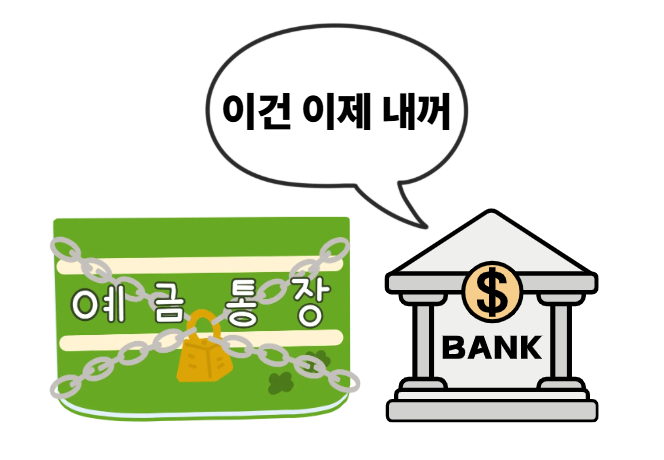
In a salary account seizure, what is frozen is just the account, not the wages themselves. Wage garnishment is different. It is the court ordering the employer to pay the wages to the creditor instead of the debtor, and this is what compulsory execution actually looks like. Because the employer receives the seizure order directly, the worry about the employer being notified feels much heavier.

In practice, cases rarely go as far as wage garnishment
Many people worry that their wages are about to be garnished, but in reality wage garnishment is not as common as they think. There are three reasons.
First, the burden on the employer. Receiving court documents about an employee's debt problems is a hassle for the employer as well, and in the process the worker may face discomfort at work.
Second, provisional attachment of wages is rarely granted. The court views provisional attachment of wages, made before a judgment, very strictly, and the bar is even higher than for provisional attachment of real estate.
Third, there is a set amount that cannot be seized. As of May 2025, up to KRW 1.85 million a month is protected from seizure.

- If your monthly salary is KRW 1.85 million or less, there is nothing to seize.
- If your monthly salary is KRW 2 million, the amount that can be seized is around KRW 150,000.
At ordinary salary levels, the money a creditor can actually collect is not large. For creditors too, wage garnishment is not a particularly efficient method of enforcement.
Can wage garnishment be avoided or reduced?

If the salary you receive is within the amount protected from seizure, there is nothing left to actually take even if a seizure is made. Leaving your job is an extreme choice, but if you leave the company, the wage garnishment placed on that company also ends.
The most realistic path is the personal rehabilitation procedure. When you file for personal rehabilitation, two protections are available.
- Prohibition order: blocks compulsory execution that may come in the future.
- Stay order: halts compulsory execution already under way.
Stay orders on wages give weight to protecting livelihoods, so they tend to be granted relatively quickly.
How does an assignment order differ from a seizure?
A term that often comes up alongside wage garnishment is a seizure and assignment order. An assignment order transfers the claim the debtor has against the third-party debtor outright to the creditor, so its legal effect is stronger than a simple seizure. Both the procedure and the way to respond differ, so it needs to be looked at separately.
Key points on wage garnishment
Wage garnishment may feel frightening, but there are clearly areas the law protects. Rather than worrying vaguely, start by checking whether the seizure against you is a bank account seizure or a wage garnishment.
Last reviewed: 2026-10-19 This article provides general legal information; specific advice is given through consultation.
Tell us what is happening first
Leave an inquiry and we will explain how to proceed after reviewing it. If it is urgent, please call 1577-0448.