
Late Card Payments and the Risks of Revolving Credit, from the Five-Business-Day Rule to Seizure
Many people ask whether being about five days late on a card payment is all right, and whether they should accept the revolving credit their card company recommends. In short, a late card payment settled within five business days usually leaves no record, but revolving credit is a structure that carries the balance over to the next month with interest and increases the burden. We explain how late card payments and revolving credit work, along with the path that leads to seizure.
What revolving credit does when your payment account is short
Suppose you are billed KRW 1 million for your card but have only KRW 500,000 in your payment account. Most people assume that they will get a low-balance text message and that topping up the shortfall will solve the problem.
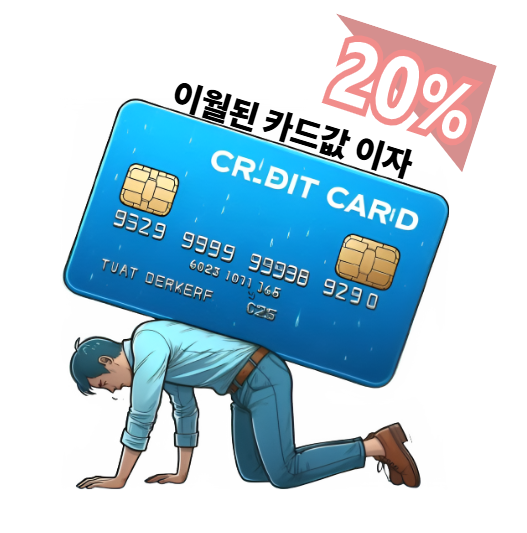
If revolving credit is set up, things work differently. Only what is in the account is paid, and the remaining card balance automatically rolls over to the next month. Interest of around 18 to 20 percent a year is added to the amount carried over.
If this keeps happening, next month you are billed all at once for the amount you could not pay this month, its interest and your new card spending. Revolving credit, chosen to avoid being late, ends up making the next month even harder.
How many days late on a card payment is acceptable?
Being a day or two late does not immediately ruin your credit. In most cases, if you pay within five business days, it is settled without any adverse effect on your credit information. Because the count is in business days, if the delinquency began on a Wednesday, the five business days run through Wednesday, Thursday and Friday of that week and Monday and Tuesday of the next.
Once this period has passed, the card company begins to classify you as a high-risk customer. From then on, collection texts and calls start coming, and after more time passes, the matter moves on to collection proceedings.
Prolonged delinquency leads to payment orders and seizure
If the delinquency is not resolved, the card company can apply to the court for a payment order. A payment order proceeds much faster than ordinary civil litigation, and if you do not file an objection within two weeks of service, it becomes final as it stands.
On the basis of a final payment order, the card company can seize your wages, bank account and lease deposit. If you are more than 90 days delinquent, you are registered as a long-term delinquent with the Korea Credit Information Services, and this record can remain for up to five years. From then on, access to financial services such as loans and cards is severely restricted.
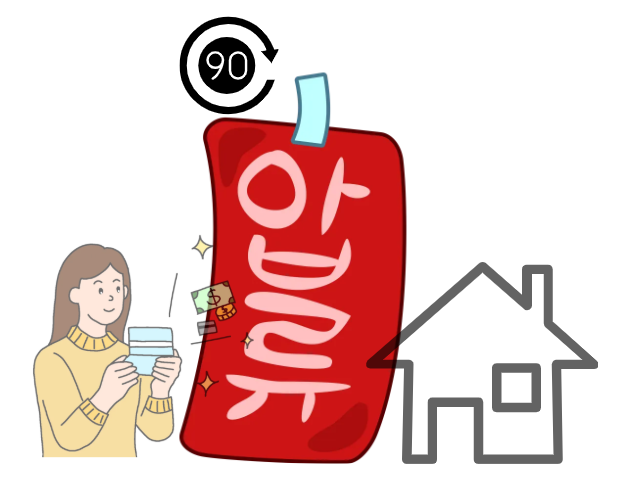
Should you accept revolving credit?
Revolving credit is a device that gives you breathing room in an emergency. If you are sure money will come in within a few days, it can be worth using briefly. But if you use it only to postpone payment without a fundamental solution, only the revolving interest grows.
There is no reason to accept it just because the card company recommends it. The first step is to check the revolving interest rate and terms that apply to you.
Cash advances also leave a mark on your credit
Cash advances are easy to use in an emergency, but their effect on your credit score is not small. Using them repeatedly or keeping them outstanding for a long time can lower your credit rating.
When your credit drops, the interest rate on your current loans may rise or an extension of maturity may be refused. Setting your cash advance limit to zero from the start is also an option.
Managing card bills starts with the payment date and the number of cards
If you set the payment date to the 14th of every month, the amount spent from the 1st to the last day of the previous month is billed in one go, making your monthly spending easy to see. If each card has a different payment date, it is hard to track where your money goes.
Having many cards does not by itself lower your credit score. However, opening several new cards at once can be read as a credit risk signal, and if your limits are far larger than your monthly income, it becomes hard to rein in spending. It is better to keep to two or three cards and divide their uses.
Save up and buy rather than paying in installments
If you need an item costing KRW 5 million, one option is to save KRW 500,000 a month for ten months and then buy it. Buying first and paying later and saving first and buying later are exact opposites in terms of cash flow.
A credit card is a tool for borrowing in advance against money you will earn in the future. The fact that it leads you to spend more than you earn is the biggest risk on the road to late card payments.
The same goes for card benefits. If you spend money you do not need to spend just to meet spending requirements, discount caps or merchant restrictions, you actually lose out. Cutting spending is often more effective than the time spent working out benefits.
Dealing with late card payments at a glance
- Revolving credit is only a way to catch your breath for a moment, not a solution.
- A late card payment settled within five business days usually leaves no record.
- Delinquency of more than 90 days leads to a long-term delinquency record, so it must be avoided.
- Use cash advances carefully, reduce the number of cards, and keep spending within your income.
Used well, a credit card is a convenient tool, but if you cannot control it, it becomes the starting point of debt.
Last reviewed: 2026-10-19 This article provides general legal information; specific advice is given through consultation.
Tell us what is happening first
Leave an inquiry and we will explain how to proceed after reviewing it. If it is urgent, please call 1577-0448.