
Three Months of Missed Repayments in Personal Rehabilitation: When Proceedings Are Discontinued and How to Respond
Many people worry that personal rehabilitation will be discontinued immediately if they miss a few months of repayments. To answer first: there is no statutory rule that proceedings must be discontinued once missed payments exceed a certain number of months. We set out, in question order, where the figure of three months comes from, what the court actually looks at and how to respond when a payment is missed in personal rehabilitation (gaein hoesaeng).

Are proceedings discontinued automatically after three months of missed payments?
The three-month standard comes from the rehabilitation commissioner's duty manual. This manual, used as a reference in practice, contains guidance to the effect that once missed repayments accumulate for more than three months, the rehabilitation commissioner may report to the court for discontinuance.
The expression to note is that the commissioner may report. This is only the point at which a report becomes possible, not the point at which discontinuance is decided. Personal rehabilitation does not end on its own just because you have missed three months of repayments, and the court and the presiding panel have broad discretion over the actual outcome.

In practice, how many months does the court wait?
It differs from case to case, but the pattern often seen in practice is as follows. Keep in mind that this is a tendency, not a standard set by law.
- About three to four months missed: a warning comes with a request to explain the circumstances.
- About six to seven months missed: the risk of discontinuance rises considerably.
Even with the same six months of missed payments, the outcome differs depending on the circumstances. Why the payments were missed and whether you can pay going forward are given more weight than how many months you are behind.
The statutory standard: is it clear that the plan cannot be carried out?
The Debtor Rehabilitation and Bankruptcy Act provides that personal rehabilitation proceedings may be discontinued when it is clear that the debtor cannot carry out the confirmed repayment plan. What the court examines is not so much the number of missed payments to date as whether it is clear you will continue to be unable to pay in the future.
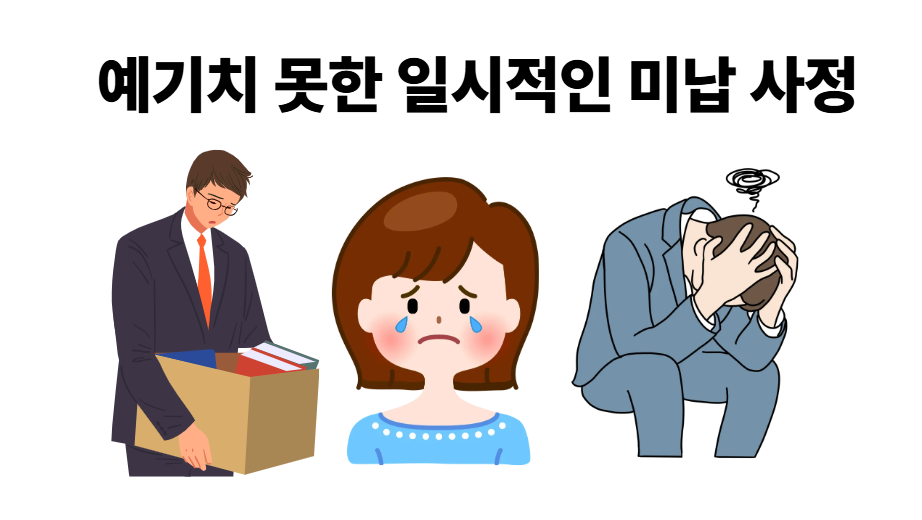
That is why the assessment can differ if the missed payments stemmed from temporary circumstances. Typical circumstances are as follows.
- A family member suddenly required large hospital bills
- A period of looking for work again after losing a job
- Urgent expenses that could not have been foreseen
In such temporary circumstances, there is room to avoid discontinuance by showing that your income has recovered and that you can pay repayments normally going forward.
If proceedings have already been discontinued, can it be reversed?
Responding before a discontinuance decision and after one are completely different in difficulty.
Before discontinuance, there is a chance of continuing the personal rehabilitation proceedings by paying the overdue repayments, even a little at a time, while explaining your circumstances. After discontinuance, reviving the proceedings requires paying all the overdue repayments. For someone who fell behind because of financial hardship, raising that money all at once is not easy, so it is not uncommon for people to end up changing course and filing again.

A Supreme Court case that reversed a discontinuance
Among Supreme Court decisions issued in 2024, there is a case in which personal rehabilitation discontinued for missed payments was revived. We present it with the party's details generalized.
The debtor had a repayment plan confirmed requiring payments of several hundred thousand won a month for 36 months, and made about eleven payments. After that, missed payments continued for nearly a year, a discontinuance decision was issued, and the appeal was also dismissed.
At the stage of re-appeal to the Supreme Court, the debtor explained that the missed payments were temporary, caused by the cost of treating a child's serious illness. The debtor first paid several million won of the overdue amount and then paid all the remaining overdue amounts. The Supreme Court found it hard to conclude that carrying out the repayment plan was clearly impossible and revived the proceedings.
What decided the outcome in this case was that the following three conditions were all met.
- The cause of the missed payments was temporary
- The ability to pay had actually recovered
- All the overdue repayments had been paid
What to do now if you have missed a payment
Personal rehabilitation is a procedure you must keep up for at least three years, so unexpected things can happen along the way. If you have missed a payment, respond in the following four ways.
- Do not leave the missed payment as it is.
- Gather documents that show your circumstances.
- If the full amount is difficult, pay at least part of it.
- Act before a discontinuance decision is issued.

In summary
- Three months of missed repayments is the point at which a report for discontinuance becomes possible, not a standard for automatic discontinuance.
- If missed payments stretch to six or seven months, the risk of discontinuance grows.
- What the court focuses on is whether you can pay repayments going forward.
- Responding before discontinuance is far more favorable, and after discontinuance, paying the full overdue amount becomes the realistic condition.
Last reviewed: 2026-10-19 This article provides general legal information; specific advice is given through consultation.
Tell us what is happening first
Leave an inquiry and we will explain how to proceed after reviewing it. If it is urgent, please call 1577-0448.