
Types of Mid-Course Discontinuance in Personal Rehabilitation and Preparing Repayments
Does everyone who starts personal rehabilitation (gaein hoesaeng) make it to the end? In reality, quite a few people stop partway through the procedure. The types of mid-course discontinuance that recur in practice fall into three broad categories, and each calls for different preparation. We have summarized them with examples.
Type 1: Income cut off by job loss or business closure
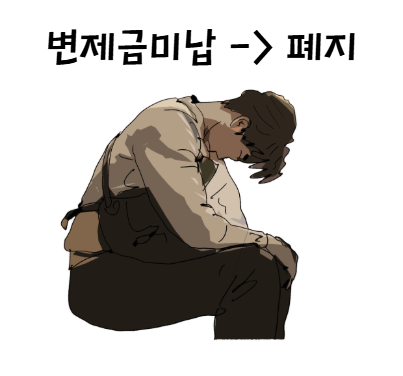
As the economy has worsened, more workers have lost jobs through restructuring and more self-employed people have closed their shops due to falling sales. If this happens in the middle of personal rehabilitation, a crisis follows immediately.
Personal rehabilitation is a procedure in which you promise, under the repayment plan submitted to the court, to pay monthly repayments based on your existing income. If your income stops, repayments fall behind, and there is a high chance this leads straight to mid-course discontinuance.
Special discharge as an exception
There is one exception: the special discharge system. If the job loss or business closure was due to an unforeseeable cause beyond your control and you have already paid at least half of the total repayments, you may apply to the court for a special discharge. However, this is at the court's discretion, so it is not always granted, and the rehabilitation court does not tend to view circumstances generously.
Type 2: An unrealistic repayment plan from the start
Some cases are discontinued even without a job loss or business closure. These are cases where a repayment plan that was hard to sustain from the outset was confirmed.
If your monthly income is KRW 2 million and a plan to pay KRW 1 million a month for 60 months is confirmed, you are effectively being told to live on the remaining KRW 1 million for five years. Since this year's minimum living expenses set by the court are about KRW 1.54 million, surviving five years on less than that is realistically difficult.
The cause seen through one case
Here is one case. A debtor filed for personal rehabilitation at a court in a provincial area, and the spouse's assets were wrongly included in the liquidation value. As a result, a repayment plan of KRW 1 million a month for 60 months was confirmed.
However, those assets were the spouse's separate property held since before the marriage, so there was no need to include them in the liquidation value. Because this point was missed, an unrealistic repayment plan was confirmed, and the debtor faced discontinuance and had to file again. In the new filing, a realistic repayment plan of KRW 700,000 a month for 36 months was confirmed.
The cause in this case was that an unjustified correction order was accepted as it was without being corrected. This is why, when drawing up a repayment plan, you must accurately distinguish the assets that should be included in the liquidation value from those that should be excluded.
Type 3: Repayments not saved in advance
This is the most common type of mid-course discontinuance these days. In quite a few cases, it takes three months, five months or even more than ten months to reach the commencement decision in personal rehabilitation.
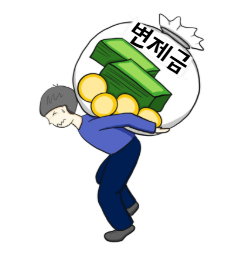
Some people do not set repayments aside during this period, thinking it is fine because the commencement decision has not yet been made. Once the commencement decision comes, however, five to seven months of overdue repayments must be paid all at once, and they cannot pay because the money has already been spent on living costs.
Personal rehabilitation is not simply a system for holding out; it is a procedure for completing repayments over a set period and receiving a discharge. If you fail to prepare repayments on time, you face an unwanted discontinuance and may have to spend money again to file anew.
Start preparing repayments 90 days after filing
Once roughly 90 days have passed since the filing date for personal rehabilitation, repayments are likely to begin.
From then on, the safest approach is to treat the repayment amount as money that is not yours and keep it in a separate bank account. People filing for personal rehabilitation because of gambling debts or debts from investing in shares or cryptocurrency need to be even more careful. When money comes into their hands, they often invest it again or spend it on gambling, and in the end they have nothing to pay even when the commencement decision comes, so discontinuance happens again and again.
Three things to check yourself
In personal rehabilitation, designing and managing the repayment plan matters far more than submitting the application. Check the following three points yourself.
- Whether the repayment plan is at a level you can afford with your living costs
- When you should start saving repayments
- Whether you are receiving sufficient guidance on progress and what to prepare
There are more cases than you might think in which a little more care would have avoided a new filing. Knowing the types of mid-course discontinuance in advance and preparing repayments early is the starting point for completing the procedure.
Last reviewed: 2026-10-19 This article provides general legal information; specific advice is given through consultation.
Tell us what is happening first
Leave an inquiry and we will explain how to proceed after reviewing it. If it is urgent, please call 1577-0448.